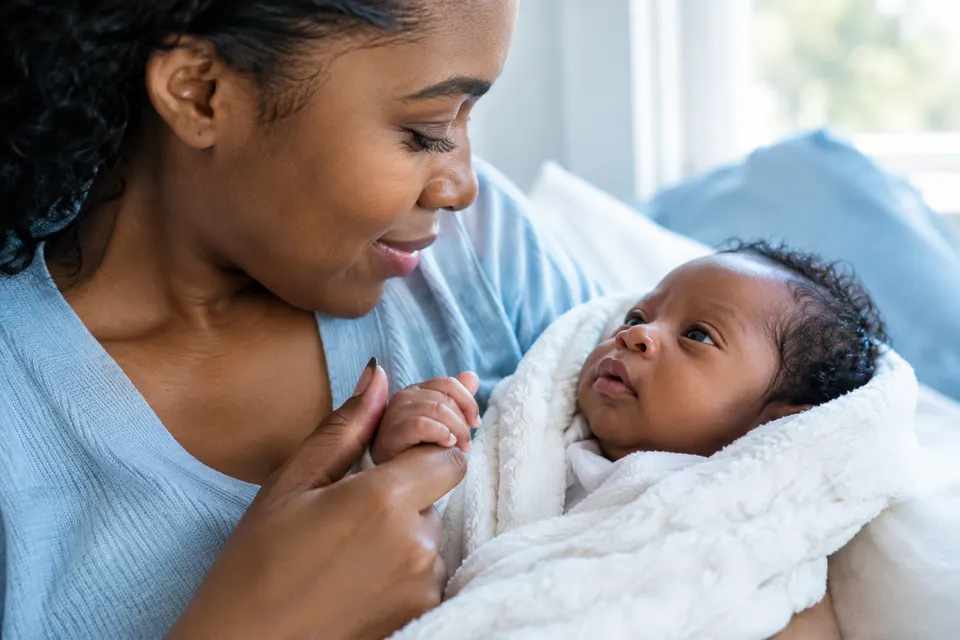
How a prenatal test works without touching the baby
During pregnancy, small fragments of the baby's DNA circulate in the mother's bloodstream. A standard blood draw from the mother captures those fragments. The laboratory separates the baby's genetic information from the mother's and compares it with a cheek swab from the possible father.
Because the only needle involved is the ordinary blood draw from the mother's arm, this approach avoids the risks tied to older invasive methods. Those methods required sampling inside the womb and are rarely chosen for paternity alone today.

Timing and who takes part
Prenatal testing can only be performed once a pregnancy has progressed far enough for sufficient fetal DNA to be present in the mother's blood. The exact point depends on the laboratory method, so confirm timing before scheduling. Bringing an estimate of the due date or the current week of pregnancy helps.
The mother provides a blood sample and the possible father provides a cheek swab. Both adults should understand and agree to the test before anything is collected.
- A blood draw from the expectant mother
- A cheek swab from the possible father
- Confirmation of the pregnancy timeline
- Agreement on who receives the result
Things to know before you decide
A prenatal result may help a family plan, prepare emotionally, or begin conversations earlier. If the result might be needed for a legal matter after birth, ask whether a documented prenatal collection is available or whether a newborn test will be needed later. Twin pregnancies and certain medical situations may affect whether a prenatal test is suitable, so share those details at the start.
How Noninvasive Prenatal Paternity Testing works, step by step
- 01
Check timing
Confirm the pregnancy has reached the point where testing is possible.
- 02
Collect samples
The mother provides a blood draw and the possible father provides a cheek swab.
- 03
Isolate and compare
The baby's DNA fragments are separated and compared with the father's profile.
- 04
Share the result
Results are released to the adults who agreed to the test.
Questions about Noninvasive Prenatal Paternity Testing
Is there any risk to the pregnancy?
The test uses a routine blood draw from the mother, the same kind used in many prenatal checkups. Nothing enters the womb.
What if there are two possible fathers?
Tell us at the start. Testing can be planned so each possible father provides a sample.